The Hidden Technology Behind Modern Face Swap Video Accuracy
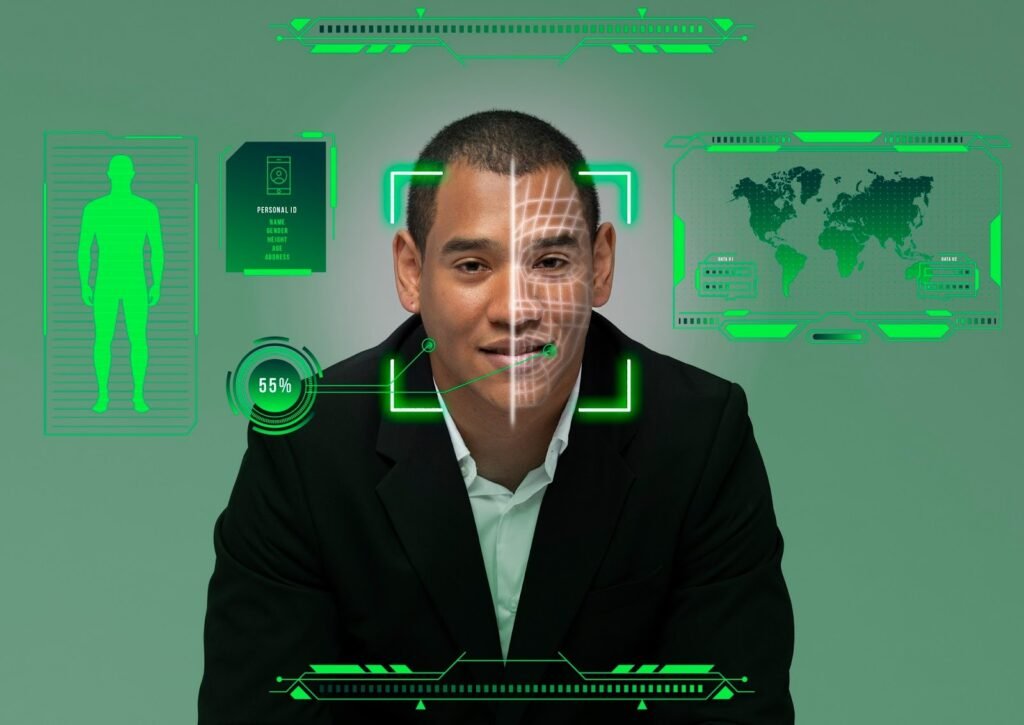
Face swap video technology has moved far beyond its early days, when results often looked distorted, glitchy, or uncanny. Today’s face swap videos can appear remarkably realistic, with accurate expressions, consistent lighting, and smooth motion. Viewers can hardly tell that the video has been altered. This leap in quality has made face swap video a mainstream tool for creators, businesses, and everyday users.
But what exactly powers this level of accuracy? The technology behind modern face swapping involves advanced artificial intelligence techniques that work together to identify, analyze, and reconstruct human facial features in motion. Understanding how these systems work reveals why the results today look so convincing and why face swap video is becoming a core part of digital content production.
What technologies make realistic face swaps possible today?
Realistic face swaps rely on deep learning models, facial landmark detection, motion transfer, and high resolution rendering pipelines that allow AI to understand and replicate complex human expressions.
Earlier face swap tools used simple overlay techniques that mapped one face onto another. These tools looked artificial because they did not understand facial depth, muscle movement, or lighting. Modern systems use neural networks trained on massive datasets of human faces and expressions. These networks learn patterns of movement and structure that allow them to generate natural looking replacements for any face.
Deep learning models like convolutional neural networks (CNNs) and transformer based architectures analyze pixel level details and global facial geometry. This helps the system understand not just what a face looks like, but how it moves. Facial landmark detection then tracks the precise positions of key points like the eyes, mouth, and jaw throughout the video.
The result is a seamless blend between the original video and the swapped face, creating the illusion that the new face belongs in the scene from the start.
How does facial landmark detection contribute to accuracy?
Facial landmark detection identifies the exact shape and position of features on a face, allowing the AI to map expressions accurately and maintain natural alignment during movement.
Modern face swap tools detect anywhere from 68 to over 100 facial landmarks. These include points along the eyebrows, eyelids, lips, cheeks, nose, and jawline. By anchoring the swap to these points, the system can match micro expressions such as blinks, smiles, frowns, and eyebrow raises.
This level of detail matters. Research from the University of Cambridge confirms that facial landmarks significantly improve realism because they guide the AI to adjust the swapped face in response to subtle muscle movements. Without this map, the face would slip, stretch, or look unnatural.
Landmark detection also ensures consistency across frames. Because the AI knows where each landmark is supposed to be, it maintains alignment through head turns, nods, or angled expressions. This makes the face swap appear stable and believable, even in challenging motion sequences.
What role does motion transfer play in creating natural expression?
Motion transfer allows the AI to replicate the movement patterns of the original subject, ensuring that the swapped face behaves realistically throughout the video.
When someone talks, laughs, or reacts emotionally, their entire face moves in a coordinated way. Motion transfer captures this dynamic motion and applies it to the swapped face. This technique uses deep neural networks trained on video datasets to understand how expressions evolve over time, not just in individual frames.
By learning temporal patterns, the AI can generate smooth motion transitions. This avoids the “frame by frame” jitter seen in earlier tools. Motion transfer also ensures emotional consistency. If the original performer expresses joy or surprise, the swapped face will show the same emotion with natural timing and intensity.
This capability is one of the biggest reasons face swap video has become so immersive. With accurate motion transfer, the new face appears to inhabit the performance authentically.
How does lighting and shading adjustment improve realism?
Lighting and shading adjustment allow the AI to match the swapped face with the scene’s environment, ensuring consistent color tones and shadows.
Lighting is one of the hardest challenges in any visual effect. If a face is too bright, too dark, or shaded incorrectly, it becomes obvious that the video has been altered. Modern AI tools use shading analysis to study environmental lighting, including shadow direction, brightness, contrast, and color temperature.
The AI then adjusts the swapped face to match these conditions by modifying highlights, reflections, and skin tone. This process draws on techniques from computer vision and image synthesis. A study from MIT’s Computer Science and Artificial Intelligence Laboratory found that lighting consistency is essential for realism, and even small mismatches can break the illusion.
Because lighting is dynamic in many videos, the AI must adjust shading frame by frame. Advanced systems handle this seamlessly, ensuring the swapped face always fits naturally into the scene.
Why are generative models critical for high quality face swap video?
Generative models like GANs and diffusion models create realistic facial textures, enabling the AI to generate a face that matches natural skin patterns and fine details.
Generative Adversarial Networks (GANs) revolutionized face swap quality by using two neural networks, a generator and a discriminator, that train against each other to create highly realistic images. GANs can produce natural skin textures, remove visual noise, and blend edges smoothly.
More recently, diffusion models have increased realism even further. These models generate images through iterative refinement, allowing for high resolution details like pores, wrinkles, and subtle color variations. According to a 2023 Stanford AI report, diffusion models outperform GANs in both fidelity and stability, making them ideal for face swap applications.
Generative models also help correct distortions or fill in missing visual information, ensuring the swapped face looks complete and coherent in every frame.
In the middle of these advanced techniques, tools like face swap video by Viggle AI bring these capabilities into user friendly platforms. The AI combines landmark detection, motion transfer, and generative synthesis to produce expressive and accurate face swaps without requiring technical skills.
How does the system preserve identity while replacing the face?
Identity preservation relies on feature encoding, where the AI learns the unique traits of a face and applies them consistently across the video.
The AI analyzes the distinctive characteristics of the source face, such as eye shape, cheek structure, and overall facial proportions. It then encodes these attributes into a latent representation. During the swapping process, this representation guides how the new face is generated, ensuring it retains its recognizable identity.
Identity preservation is crucial because it allows the audience to instantly recognize who the swapped face belongs to. A University of Washington study found that consistent identity cues significantly affect viewers’ perception of realism. Without proper encoding, the face may look generic or inconsistent across frames.
Modern AI models excel at identity preservation, which is why today’s face swap videos can convincingly portray celebrities, creators, or everyday users.
What does the future of face swap video accuracy look like?
The future promises even higher accuracy through real time rendering, improved eye movement modeling, and deeper integration of emotional intelligence.
Real time face swap systems are already emerging, powered by more efficient neural networks and hardware acceleration. These systems will enable live streaming with face swapped characters, expanding possibilities for influencers, gamers, and creators.
Eye movement modeling is another focus area. Eyes are central to human expression, and improvements in this area will make face swaps even more life like. Future AI models will also incorporate emotional intelligence, understanding and replicating deeper emotional context.
As datasets grow and models evolve, face swap technology will become nearly indistinguishable from real footage, unlocking new creative and professional applications.
Conclusion
Today’s face swap video accuracy is the result of advanced AI techniques working together, including landmark detection, motion transfer, lighting adjustment, and generative synthesis. These systems allow face swap tools to produce realistic, expressive, and visually coherent results that seamlessly blend into modern video content. With tools like face swap video by Viggle AI, creators and businesses can access this cutting edge technology with ease, enabling new possibilities in storytelling, marketing, and digital engagement. As AI continues to advance, face swap technology will only grow more accurate, more versatile, and more integral to the future of video production.